


What Is a Video Ad Hook?
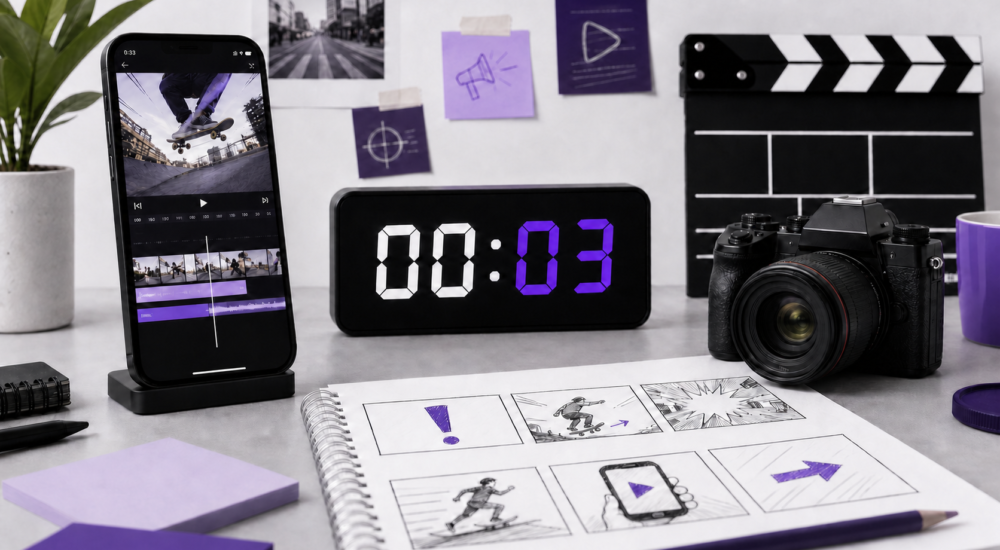
A hook is the opening moment of an ad. It can be a direct question, a familiar problem, a surprising result, a visual comparison, or a quick demonstration. A good hook does not explain the whole offer. It makes the right viewer curious enough to watch the next scene.
Why the First 3 Seconds Matter
Social feeds give people endless choices, so viewers decide quickly whether a video feels relevant. A slow introduction or a logo-only opening often loses attention before the message begins. A clear, audience-focused first three seconds can improve watch time, make the offer easier to understand, and increase the chance of a click or conversion.
7 Effective Video Ad Hook Ideas
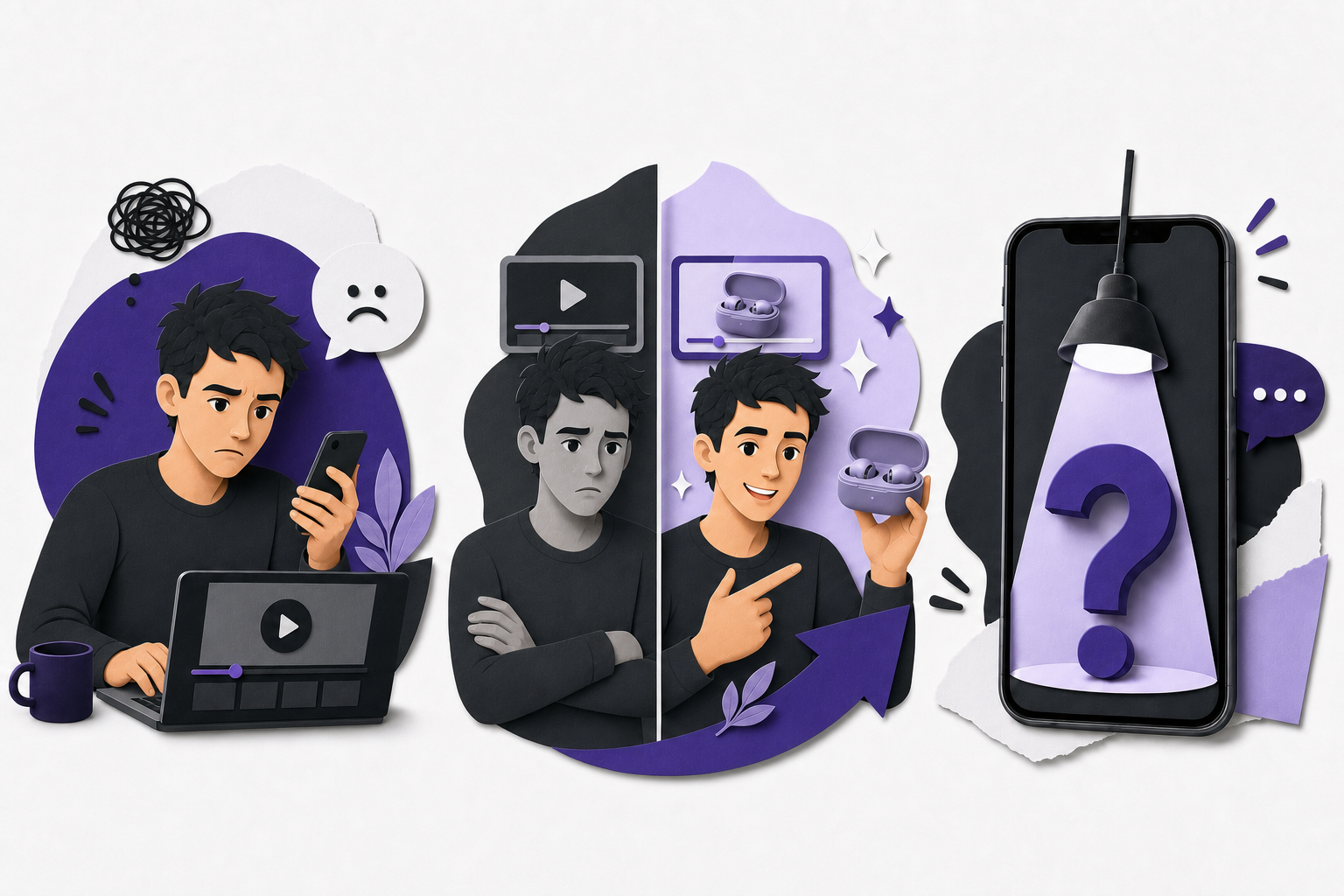
1. Lead With the Problem
Name a problem your audience already recognizes: “Posting good videos but getting no engagement?” Relevance makes people pause.
2. Show the Result First
Open with the finished outcome, then reveal how it was achieved. This creates a natural information gap.
3. Ask a Specific Question
Use a question tied to the buyer’s goal: “What makes people stop on a product ad?” Make sure the video delivers a useful answer.
4. Use a Before-and-After Comparison
Contrast the old and new result, the wrong and right approach, or two versions of the same creative. Visual comparisons are easy to understand on mobile.
5. Demonstrate the Product
Show the product or service working instead of describing it. Proof in motion is often more convincing than a long introduction.
6. Break a Pattern
Use an unexpected camera angle, movement, or statement. Keep it relevant to the message so the hook attracts qualified attention rather than empty views.
7. Challenge a Common Belief
Start with a useful correction, such as: “Camera quality is not the main reason your ad performs.” Then support the claim with clear evidence.
A Simple Formula for Writing Better Hooks
Common Hook Mistakes
- Starting with a long logo animation.
- Using vague language for everyone.
- Making a promise the video cannot prove.
- Adding small or crowded text that is hard to read on mobile.
- Creating an exciting opening that has no connection to the offer.
How to Test Video Ad Hooks
Do not rely on one opening. Create three to five hooks for the same ad while keeping the main body and call to action as consistent as possible. Test a question, a result, and a comparison. Then review early retention, click-through rate, and conversions. The winning hook is not simply the most attractive one; it is the opening that brings the right audience into the rest of the message.
Final Takeaway
Strong video ad hooks combine clarity, curiosity, and audience relevance. Start with a real customer problem or desired result, test multiple openings, and make every second serve the offer. When the first three seconds are designed with purpose, a video has a better chance of turning a scroll into attention—and attention into action.